Unify your assets.
Automate your operations.
The universal operating layer for tokenized and traditional assets—without replacing existing systems.










.png)
.png)

Knova is the real-time operating layer for financial institutions managing traditional and tokenized assets.
Knova unifies various assets for automated workflows, reconciled records, and multi-asset operations with our modular service —without taking custody or being in the flow of funds.

Knova combines 3 powerful components into 1 unified system

Self-Serve Connectors
Easy-to-add integrations that can be built by a partner, institution, or Knova. IP is owned by institutions and connectors are replaceable with no vendor lock-in.
Digital Twin Assets
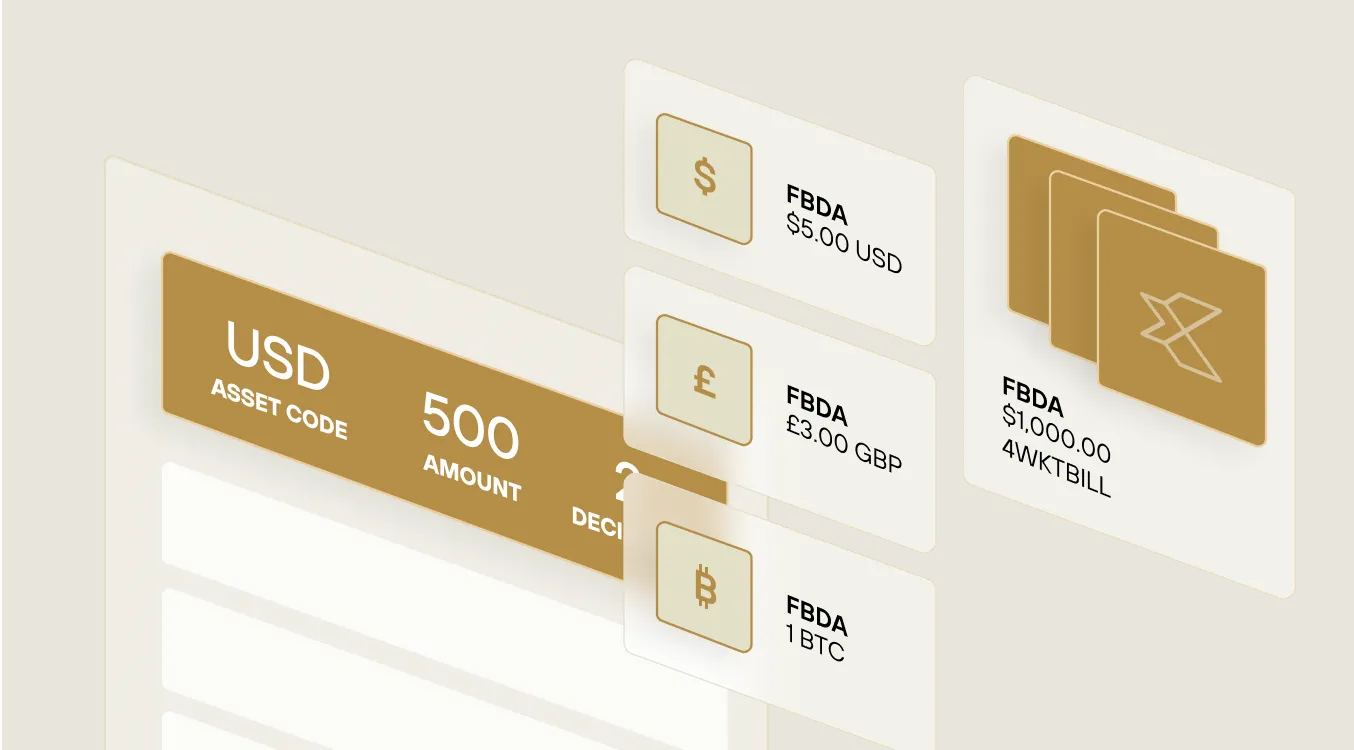
A standardized, cryptographically verifiable representation of every asset (ownership, state, relationships, and ontology), updated in real-time. Powers AI-assisted automation, insight, risk, and recommendations.

Transaction Workflow Engine
Execution ranging from simple to complex, multi-party transactions through configurable automations and an API layer. Full audit lineage per operations across on-chain, off-chain, and business processes.
Operational excellence across both your traditional and tokenized assets

Digital Asset Capabilities
Orchestrate complex workflows like wallet rebalancing, automated investment decisions, netted settlements, sweeping, staking, and on and off-ramping stablecoins—using your existing custody and payment providers.
Optimize operations and transaction fees through various settlement strategies, automated workflows, reduced developer time, and sub-ledger transactions.
Unlock
Improve asset yield, monetize quick integration with new partners, and unlock new products / services.
Unified & Proactive
Transact any asset type through one interface. Real-time visibility across all parent-child accounts and systems.


Programmable Automation
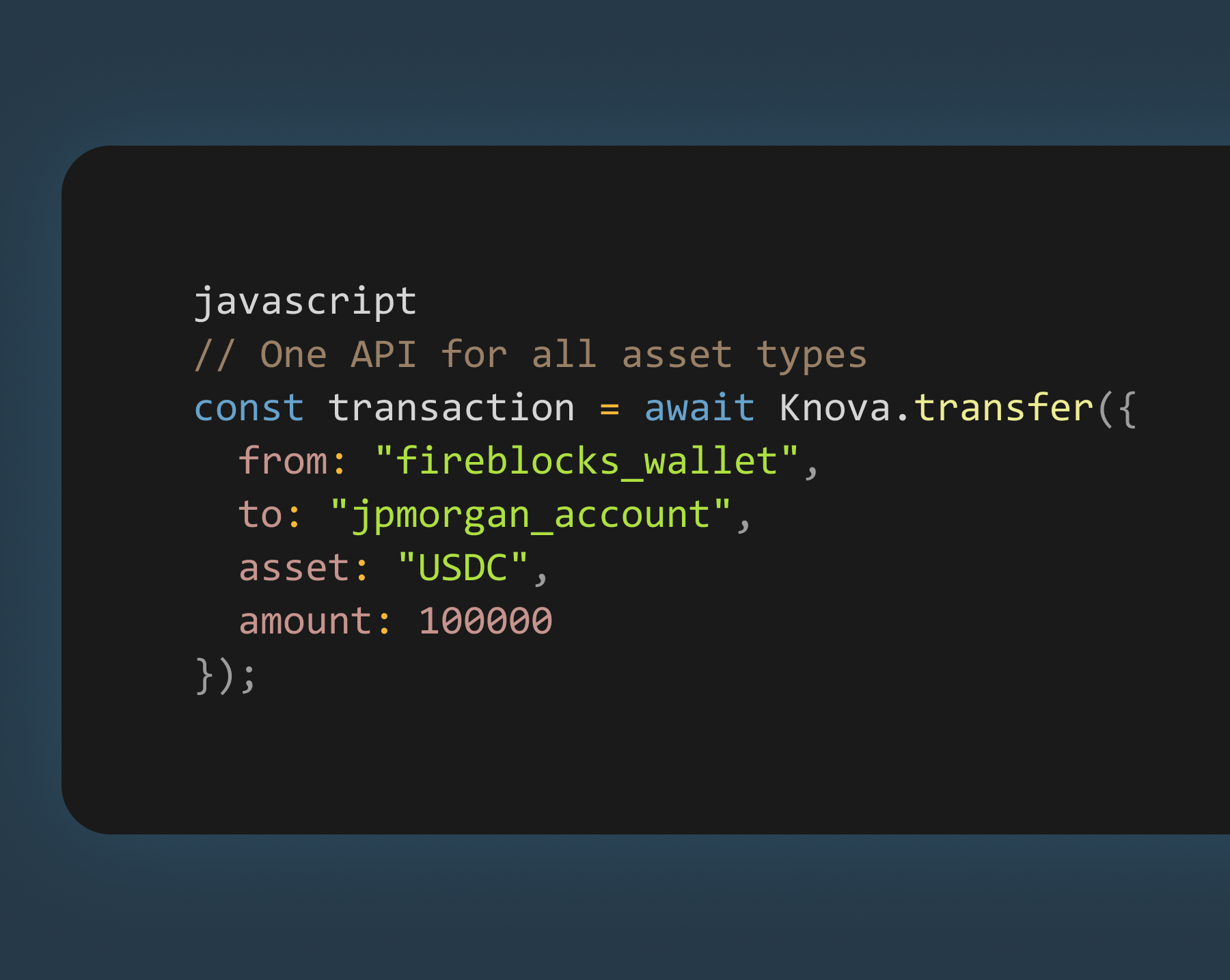
Configure any transaction type and multi-step operations process into a single powerful API call— control automation of workflows through a single tech stack.
Supporting Various Multi-Asset Businesses
Exchanges
Trading Firms
Asset Managers
Fintechs and PSPs
Banks
Tokenized Issuers
Digital Asset Custodians
Digital Asset Infrastructure Providers
Financial Market Infrastructures (FMIs)